








Composting and Wet Waste Planning for a Kolkata Household
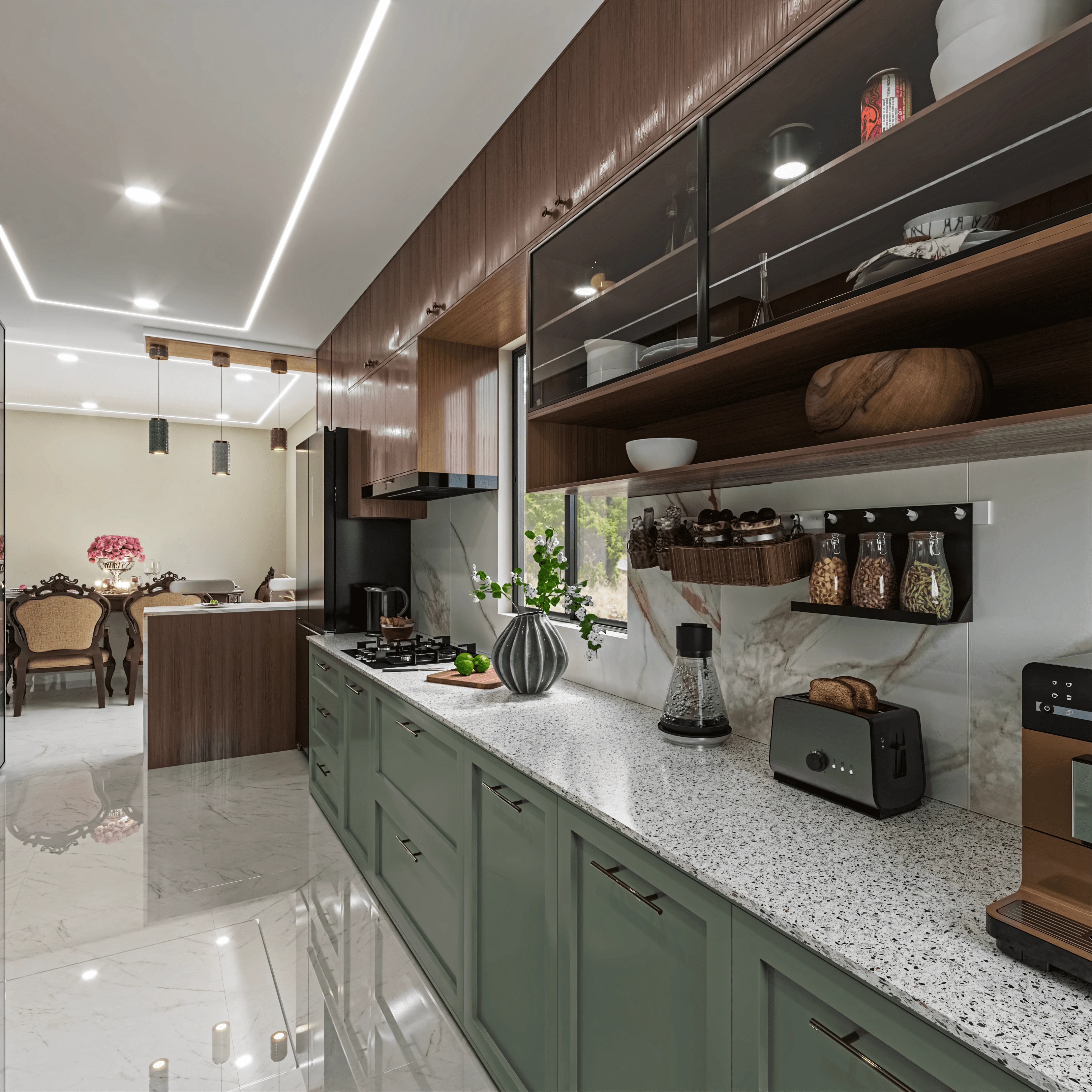
Almost every Kolkata household we design for produces more wet waste than dry, and yet almost every kitchen we are asked to renovate has exactly one bin under the sink, usually a small plastic one with a swing lid, usually overflowing by evening. That single bin is where the whole problem starts, because once wet peels, tea leaves, fish and chicken trimmings, cooked leftovers and rice starch all go into the same liner as paper, foil and plastic wrappers, nothing can be composted, nothing can be recycled, and the bag that leaves your flat every morning is a wet, heavy, dripping mess that your building staff has to carry down. We have delivered 330 plus buildings across New Town, Salt Lake, Rajarhat and greater Kolkata since 2014, and the pattern is consistent, right, the households that manage waste well are not the ones with the most expensive composters, they are the ones whose kitchen was planned with segregation in mind from the drawing stage.
This piece is about the design side of that, because composting in a Kolkata home is only ten percent about the composter and ninety percent about where you put things, how far you have to walk, how the smell moves, and how the whole system survives four months of heavy humidity. A compost system that works in a dry climate will behave completely differently here, and if you set it up on a balcony that gets lashed by monsoon rain from the south west, you will abandon it by the second week of July. So we plan for the wet, the heat and the ants first, and the aesthetics second.
We are an architecture and interior practice, not a municipal waste consultancy, so treat everything here as design guidance grounded in what we actually see on site, and confirm current collection rules, any composting mandate for your plot size or building category, and any incentive scheme with the relevant local authority for your own address before you commit to a system.
What a Kolkata household actually throws away, and why it matters to the drawing
Before anyone buys a composter, we ask the family to describe a normal cooking day, because the waste profile changes the design. A vegetarian household in a three bedroom flat produces a fairly clean stream of peels, stalks, tea leaves and fruit skins that composts beautifully and smells mildly sour at worst. A household that cooks fish four days a week and mutton on Sundays produces a stream that includes bones, scales, gills and blood water, and that stream will attract crows, cats and flies within an hour if it sits in an open bin, and it will turn a passive compost bin into a genuine nuisance for the neighbour on the floor below. Neither is a problem, but they need different plans.
Then there is the volume question. For a family of four in Kolkata cooking mostly at home, a rough working figure we use in planning is somewhere around half a kilo to a kilo of wet waste a day, and that is an illustrative planning number from what we observe on site rather than a measured statistic, so weigh yours for a week if you want accuracy. What that number does is size the system. At that rate a two bin or three bin rotating composter of modest capacity is usually enough for a flat, while an independent house with a garden, four or five residents and regular guests will want a larger drum or a pit, and a G plus 4 building where all the flats share one arrangement needs something closer to a small institutional setup with a dedicated ventilated corner, which is a decision that belongs in the residential architecture stage and not in a retrofit conversation two years after possession.
Designing the kitchen so segregation actually happens
The single highest leverage decision is the under counter bin arrangement, and this is where most kitchens in the city fail. One bin means one stream, so the first rule is that the sink cabinet needs at least two pull out bins side by side, wet on the side nearest the chopping zone and dry on the other, and if you can find the width, a third narrow slot for what we call the awkward stream, which is bones, shells, coconut husk and anything that should not go into a home composter. When we lay out a modular kitchen we treat the bin cabinet as a fixed element the same way we treat the hob and the sink, and we set it within arm's reach of the primary chopping counter, because a bin that is two steps away gets ignored under time pressure and everything ends up in whichever bin is closest.
Bin cabinet detailing matters more here than in a dry climate. We specify a solid base tray rather than a slatted one, because wet waste leaks, and a leaked plate of fish water sitting on a chipboard cabinet base for a week will delaminate it and then smell permanently. We also keep the bin carcass separate from the plumbing bay, so the water line and the waste line are not sharing a damp box, and we build a small vent slot into the shutter or the plinth so the cabinet is not perfectly airtight, since a sealed damp box in a Kolkata August is a mould culture. These are small drawing decisions that cost nothing at the design stage and are expensive to correct later, which is one of the reasons we push clients to settle the interior design brief and the kitchen brief together rather than treating interiors as a separate phase that happens afterwards, a point we go into in more depth in our note on whether to hire an architect or an interior designer first.
Where the composter goes, and why that is an architecture question
The composter location decides whether the system survives. We look for four things, which are shade for most of the day, protection from direct driven rain, some air movement, and a position where a leak or a spill does not run towards a bedroom door or a living area. In a flat that usually means the utility balcony off the kitchen, in a duplex or an independent house it can be a service yard or a shaded side setback, and in a building with a garden it can be a semi shaded corner near the boundary.
The trap in Kolkata is the balcony that faces the direction the monsoon comes from, because a composter that gets rained into becomes anaerobic within days, and anaerobic compost is the smell people associate with composting failing. So we look at orientation, at the monsoon driven rain direction, and at where the parapet or the projection actually shelters, and then we place the unit, and if the only available spot is exposed we design a small louvred screen or a deep overhang so the unit stays dry while still breathing. Getting cross breeze across that corner also helps, and the same natural ventilation thinking that keeps a Kolkata home comfortable in May keeps the compost aerobic in July, which is a nice bit of overlap between comfort design and waste design.
Drainage is the second half of it. Any composting corner should sit on a floor that falls towards a drain point and not towards the threshold of the room behind it, the finish should be a tile or a screed you can hose down, and there should be a tap within hose reach, because a system you can rinse in two minutes gets rinsed and a system that needs a bucket carried across the flat does not. We usually flag this at the plumbing layout stage, which for a renovation is a small change and for a completed home is a wall chase and new tiling, so it is worth catching early if you are already planning a renovation.
| Composting spot that works | Composting spot that fails |
|---|---|
| Shaded utility balcony with a floor drain | Open balcony that catches driven rain |
| Tap and hose point within a metre | Nearest water is the kitchen sink |
| Air movement across the corner | Sealed alcove with no cross breeze |
| Away from bedroom and living windows | Directly outside the bedroom window |
| Hard washable floor with a fall | Carpet, wood or a flat unsloped finish |
Choosing a system that suits your household, not the internet's household
Broadly there are four things people use in Kolkata homes. Stacked terracotta or plastic pot sets are cheap, they look decent on a balcony, and they suit a small vegetarian household producing under half a kilo a day, but they clog and go sour if you overload them. Rotating twin drum composters take more volume, tolerate mistakes better, and are our usual recommendation for a family of four, and the rotation means one drum matures while the other fills. Bokashi bran fermentation handles cooked food and small quantities of meat because it is an anaerobic pickling process in a sealed bucket, but it produces a pre compost that still has to be buried or finished in soil, so it only closes the loop if you have a garden or a large planter bed. Then there is vermicomposting with earthworms, which produces the best output by a distance, but it is the most sensitive to heat, so a west facing balcony in a Kolkata May can genuinely cook the bed unless it is properly shaded.
As an indicative range at the time of writing, a decent home composting setup for a flat sits somewhere in the low thousands of rupees, and a larger drum or a small community unit for a building runs into the tens of thousands, but prices move constantly and depend on the vendor, so treat those as ballpark orientation and not a quote. The design cost is separate and usually negligible, since it is mostly a matter of allocating space correctly, and if you want the wider picture on how design fees are structured we cover that in our piece on architect fees in Kolkata.
| System | Suits | Watch out for |
|---|---|---|
| Stacked pots | Small vegetarian household | Clogs if overloaded |
| Twin drum rotary | Family of four with mixed cooking | Needs a sheltered spot |
| Bokashi bucket | Cooked food and some meat | Output still needs soil to finish |
| Vermicompost bed | Households with a garden | Heat stress in April to June |
| Building level unit | G plus buildings sharing | Needs a designed ventilated corner |
The Kolkata specific problems, which is where most systems die
Humidity is the first one. Home compost wants roughly a moist sponge consistency, and Kolkata air will push your pile wetter than that on its own, so the discipline here is to add far more dry brown material than the generic guides suggest. Dry leaves, shredded newspaper, sawdust, cocopeat, torn egg cartons, all of it helps, and we tell clients to keep a lidded bin of browns right next to the composter so adding a handful is one motion and not a project. If the pile goes soggy and starts smelling of ammonia or rotten egg, that is almost always too wet and too airless, and the fix is browns plus a turn, not a chemical.
Ants and fruit flies are the second, and they arrive fast in this climate. A composter standing in a shallow tray of water breaks the ant trail, keeping the lid genuinely closed handles most of the flies, and burying each day's fresh addition under the existing material rather than leaving it on top handles the rest. The third is the rat and crow question, which is why we are firm that fish and chicken waste should not go into an open or loosely lidded home composter on a Kolkata balcony, and should either go through a sealed bokashi bucket or straight out with the collection stream.
The fourth is the monsoon itself, because a system that runs beautifully from November to March can collapse in a fortnight of continuous rain if the corner is not detailed to stay dry. The same logic that governs how we detail terraces, balcony thresholds and drain falls applies here, and we have written separately about monsoon proofing a Kolkata home if you want the wider version of that argument. On projects like our Action Area 2 residence in New Town we treat the utility balcony as a working wet zone with its own fall, its own drain and its own shelter, which is what makes a composter there viable rather than aspirational.
- Two or three segregated bins inside the kitchen cabinet
- Solid, sealed bin cabinet base that will not delaminate
- Shaded, rain protected corner for the composter
- Floor drain and tap within hose reach of that corner
- A lidded store of dry browns beside the unit
- A decided route for fish, bones and shells that does not go into the composter
- A named person in the household who turns the pile weekly
Planning it at the right moment in the project
The cheapest time to solve all of this is during design, and the most expensive time is after handover. When we are drawing a new house we allocate the service yard or utility balcony, we set the floor level and the fall, we run the drain point, and we make sure the kitchen bin cabinet is sized before the modular quotation is frozen, and none of that adds meaningfully to cost. When somebody comes to us after possession, the same outcome needs a tile removal, a new fall, a chase for a water line and often a new cabinet, and that is a week of dust in a home you are already living in.
For anyone building fresh in New Town or Rajarhat, this sits naturally alongside the other service planning that happens before drawings go in for sanction, and it is worth reading it in the context of how the NKDA building plan sanction process shapes a project timeline, because service yards, setbacks and open space all interact with what you can actually place outdoors. Where and how much open ground you have is governed by setback and open space rules, and a composting corner tucked into a side setback needs to respect those margins rather than quietly encroach on them, which is exactly the kind of detail that gets flagged at inspection. There are also broader green and sustainability norms worth understanding, particularly if you are also considering rainwater harvesting or solar, since these things share the same terrace and service planning conversation.
Our principal architect Sumana Kumar routinely takes projects through those sanction processes, and the practical reality she keeps pointing out to clients is that the service side of a home, meaning the utility yard, the drying area, the waste corner and the maintenance access, is the part everyone underdraws and everyone later complains about. A beautiful living room does not compensate for a service balcony that floods and stinks.
- 01Assess your actual waste profile
- 02Fix bin positions in the kitchen layout
- 03Allocate and shelter the composting corner
- 04Run drain and tap to that corner
- 05Commission the composter
- 06Review at three months and resize
Making it survive past month three, and scaling it to a whole building
Most home composting attempts in Kolkata fail somewhere between week six and month three, and the reason is almost never technical. It is that the pile was never turned because nobody owned the job, or the browns ran out and nobody restocked, or the family went away for two weeks in the middle of the rains and came back to something unpleasant. So the design answer is to reduce the number of steps, which means the bin, the browns and the composter should all be within a few steps of the chopping board, the composter should be easy to turn with one hand, and the whole corner should be washable in two minutes.
The other honest answer is to right size expectations. A flat producing three quarters of a kilo a day is not going to consume all its own compost, and if you have four planters on a balcony you will end up with surplus, so decide upfront where it goes, whether that is to a neighbour who gardens, to the building's landscaping, or to the housing complex's own arrangement. Households that plan the output side stay with it, and households that end up with six buckets of finished compost and nowhere to put them quietly stop.
At building scale the calculus changes, and this is worth raising with your architect early if you are building a G plus structure or an apartment block. A shared unit at the ground level needs a properly ventilated, screened, hosed and drained enclosure, ideally close to the collection point so the building staff are not carrying wet waste across a landscaped forecourt, and it needs to be drawn into the ground floor plan alongside parking, the pump room and the meter room rather than squeezed in later, which is exactly how these things end up next to somebody's ground floor bedroom window. If you are already working through parking and ground level planning, our note on parking norms in New Town buildings covers how tight that ground floor real estate gets, and the waste enclosure needs to be part of that same jigsaw rather than an afterthought. On a purely practical level, a building that composts well also produces markedly less leachate in its garbage room, which means less smell, less pest pressure and much happier residents.
At the end of the day, composting at home in Kolkata is not a moral project, it is a housekeeping one, and it works when the layout makes the right action the easy action. Two bins instead of one, a sheltered corner with a drain, a store of dry browns within reach, and a clear rule for fish and bones. That is most of it. If you are planning a new home, a renovation or a kitchen and you want the service side of the house designed properly rather than left to improvisation, talk to us and we will work it into the drawings from the start, because it costs almost nothing then and it changes how the house feels to live in every single day.