








Buying in a Gated New Town Township vs an Old Salt Lake Block: What Changes Day to Day
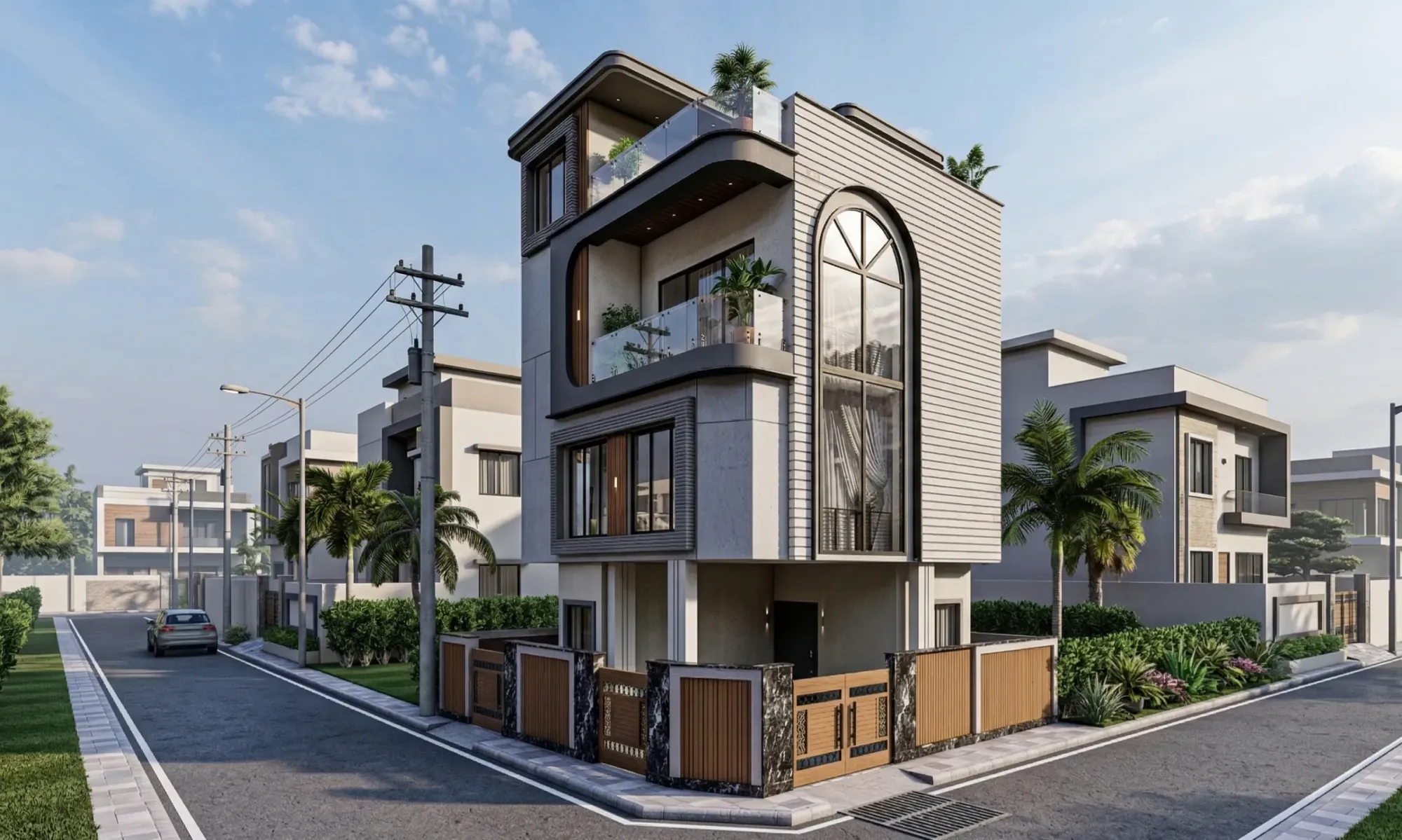
If you're weighing a flat in a gated New Town township against a resale unit in an old Salt Lake block, the brochure numbers will look similar enough that the decision feels like it comes down to price per square foot. It doesn't. What actually changes your life is the stuff nobody puts in the brochure, and we've watched enough families move between the two to know exactly where the friction shows up.
We've been doing architecture and interior design work across New Town and Salt Lake since 2014, and at this point we've touched more than 330 buildings between the two, so this isn't theory, it's what we see on site visits every week. This piece walks through what genuinely changes day to day when you move from an old Salt Lake block to a gated New Town township, where the paperwork gets easier or harder depending on which one you pick, and what that means for how you eventually renovate or fit out the place.
The short version is that New Town's townships were planned as single blocks with unified rules from day one, while Salt Lake's blocks grew organically over five decades under Bidhannagar municipal jurisdiction, and that one structural difference cascades into almost everything else, from how fast your building sanction moves to how much say you get over your own balcony grille.
Governance is the first thing that changes
In a gated New Town township, you're typically dealing with a single developer-run or resident-association-run body that controls the boundary wall, the internal roads, the security, and often the common area maintenance, and that body answers to NKDA for anything structural. The catch here is that this concentration of control cuts both ways, right, it means faster decisions on things like a facade repaint or a new gate design because there's one committee to convince, but it also means you're bound by a single set of aesthetic and structural rules the moment you move in, and deviating from them for even a small addition can mean a longer approval loop than you'd expect.
An old Salt Lake block, by contrast, usually has each plot or building operating semi-independently under Bidhannagar rules rather than a single township authority, so a cooperative housing block might have its own managing committee, but the block itself doesn't have the same top-down control over every unit's exterior that a New Town township does. That gives owners more individual latitude for renovation, but it also means less consistency, so you'll see one building with a beautifully redone facade next to one that hasn't been touched since the eighties, and coordinating anything at the block level, like a shared boundary wall repair, takes real negotiation rather than a committee vote.
| Feature | Gated New Town Township | Old Salt Lake Block |
|---|---|---|
| Single body controls boundary, security, common areas | Individual plot or building owner has more autonomy | Aesthetic and structural rules are uniform across the township |
| Rules vary building to building, often informal | Faster committee decisions on shared infrastructure | Slower, negotiation-heavy decisions on shared elements |
| Newer construction, contemporary [reinforced concrete](https://en.wikipedia.org/wiki/Reinforced_concrete) detailing | Mixed vintage, older buildings often need retrofit for modern services |
Setbacks, parking, and how your plot actually sits
This is where the day-to-day difference gets very concrete. New Town plots inside a gated township were laid out with modern setback and parking norms baked into the original masterplan, so if you buy a plot in Action Area I or II, the front and side clearances, the internal road widths, and the parking allocation per unit were fixed before a single building went up. We walk clients through this constantly when we're doing residential architecture work in New Town, because it means your design has to work within a plot that was already shaped by someone else's planning decisions, and understanding those constraints early, through our NKDA building rules guide or the specific setback and open space rules, saves weeks of redesign later.
A Salt Lake block, especially the older sectors, was planned decades ago under different norms entirely, so plots there tend to have generous open ground compared to what NKDA allows in New Town today, but the flip side is that parking was never designed for the number of cars a household owns now. We've done renovation work on Salt Lake plots where the entire ground floor had to be rethought just to fit two cars without eating into the garden, which almost never happens on a New Town plot built to current norms.
What changes when you actually renovate or fit out
For a gated New Town flat that's a few years old, interior work tends to be straightforward because the base building is modern, the electrical load is already sized for air conditioning and modular kitchens, and the false ceiling and services above it were installed with contemporary HVAC in mind. On these projects we typically run a full residential interior design scope in the 8 to 12 week range, because we're not fighting the building, we're just designing within it.
A Salt Lake cooperative flat is a different job entirely. The wiring is often original to the block, the bathroom plumbing usually needs to be opened up rather than worked around, and the kitchen layout was drawn for a smaller family and a different way of cooking, so getting the kitchen work triangle right often means moving a wall rather than just swapping cabinetry. We've written specifically about this in our guide on renovating a Salt Lake cooperative home, and the honest advice there is to budget more time upfront for opening up walls and checking what's actually behind them before you commit to a layout.
- 01Site survey and services check
- 02Layout and structural changes finalised
- 03Civil, plumbing, electrical rework
- 04Kitchen, bathroom, and [modular kitchen](/service-pages/modular-kitchen-design) fit-out
- 05Final finishes and handover
One thing that surprises a lot of Salt Lake owners is how much the Vastu Shastra orientation of an older flat can conflict with what they want to change, since the original layout was fixed decades ago and moving a kitchen or a main door in a shared block isn't always structurally free. New Town buyers, on the other hand, often get to choose a plot orientation from the start, so Vastu-compliant design becomes a planning input rather than a retrofit problem, and it's one of the clearer advantages of buying into a township early.
- Confirm which authority sanctions the plot, NKDA or Bidhannagar
- Check parking allocation against actual household car count
- Ask for the building's original electrical load and wiring age
- Walk the boundary wall and shared amenities before signing
- Get a plumbing and waterproofing check on any resale Salt Lake unit
Money, maintenance, and the long game
Cost to build or renovate differs meaningfully between the two contexts, mostly because a New Town gated project starts from a clean structural slate while a Salt Lake retrofit has to account for opening up finished surfaces, checking for old waterproofing that's likely due for redoing, and working around a building that's still occupied by neighbours during construction hours the association controls. Our cost to build a house in New Town guide breaks down the moving pieces for new construction, and if fees are the specific question, our architect fees in Salt Lake explained piece covers what tends to differ from a New Town commission.
Maintenance is the other quiet difference. A gated township usually bundles security, common lighting, and landscaping into a monthly fee that's predictable and visible, whereas an old Salt Lake block's shared costs, boundary wall repair, common corridor repainting, borewell upkeep, tend to come up as one-off asks that the managing committee has to negotiate and collect for each time. Neither model is wrong, but if you're the kind of buyer who wants cost predictability, that's worth weighing as heavily as the purchase price itself. And if you're comparing Action Area I against Action Area II or III specifically, our breakdown of Action Area I vs II vs III building rules is worth a read before you shortlist a plot.
Water, power backup, and the utilities nobody checks until the day they fail
Governance and setbacks get all the attention in these conversations, but the thing that actually disrupts your week, the thing that has a client calling us at nine at night, is almost always a utility failure, so it's worth walking through how water supply and power backup actually differ between a gated New Town township and an old Salt Lake block, because the answer isn't obvious from the outside.
A New Town township was built with its own water infrastructure from day one, so most gated developments run on a combination of NKDA-supplied water and a dedicated underground reservoir plus overhead tank system that the township's own operations team maintains, and because the whole complex was designed around a fixed number of units, the sizing was done for that exact load rather than retrofitted later. Power backup follows the same logic, since a New Town township typically runs a shared diesel generator or now increasingly a hybrid setup sized for common areas and, in the better developments, partial backup into each flat, and that capacity was planned alongside the electrical load rather than bolted on after residents complained. The catch here is that you're still dependent on the township's operations team doing their maintenance on schedule, so it's worth asking directly, before you buy, how often the generator gets serviced and who actually owns the annual maintenance contract, because a well-designed system with a lapsed AMC fails just as hard as no system at all.
An old Salt Lake block tells a completely different story, and it's not automatically the worse one. Many of the older blocks draw on a mix of Bidhannagar municipal supply and their own borewell, and because these buildings have been running for two, three, sometimes four decades, the borewell and pump arrangement has usually been through several rounds of repair by residents who know exactly where the weak points are, so the system tends to be more resilient in a practical sense even if it looks less polished on paper. Power backup in a Salt Lake block is almost always a per-building or per-owner decision rather than a township-wide one, so you'll find blocks where the managing committee has installed a shared generator for common areas and lifts, and you'll find blocks where every flat owner has their own small inverter setup instead, and the honest answer is you need to ask this specific question on your site visit rather than assume either way.
| Utility | New Town Gated Township | Old Salt Lake Block |
|---|---|---|
| Water source | Reservoir + NKDA supply sized to unit count | Bidhannagar supply + often own borewell |
| Power backup | Shared generator or hybrid managed by township ops | Per-building committee decision or individual inverters |
| Maintenance ownership | Single operations team with an AMC | Managing committee coordinates as issues arise |
| Typical response time | Faster once escalated to one body | Depends on committee responsiveness |
The connectivity layer matters just as much and gets discussed even less. Fibre broadband rollout in New Town's newer sectors has generally kept pace with construction, so most gated townships have two or three ISPs already wired into the building with ducting done at construction stage, which sounds like a small thing until you're the resident trying to get a new provider's cable pulled through a building that was never designed for it. In an older Salt Lake block, the original wiring predates the fibre era entirely, so providers usually run cable along the building exterior or through common risers that were added later, and it generally works fine, but it's worth checking with your specific building before you assume every provider serves every flat, because coverage inside Salt Lake is genuinely patchy block to block in a way it rarely is inside a planned New Town development. At the end of the day, none of this shows up in a brochure or even in most site visits unless you specifically ask, so we tell every client doing a walkthrough with us to ask the caretaker or the committee secretary about water source, generator AMC status, and which ISPs actually have working infrastructure in the building, because getting a straight answer on those three questions before you sign tells you more about your next five years there than the finish quality of the lobby ever will.
One more thing worth deciding early
A question we get constantly from both New Town and Salt Lake buyers is whether to bring in an architect first or an interior designer first, and the honest answer depends on which of these two contexts you're in, since a New Town plot often needs architectural input before anything else, while a Salt Lake resale flat can sometimes go straight to interiors if the structure is sound. We've laid out the reasoning in who to hire first in New Town, and it's a genuinely useful gut-check before you start collecting quotes.
For what it's worth, we've handled both sides of this comparison directly, from ground-up residential architecture inside gated New Town townships like the work we did on a G+4 residence in Action Area II, to full renovation and remodeling of older Salt Lake units where the brief was as much about fixing old services as it was about the new look. At the end of the day, the building type you buy into shapes the next decade of your life more than the finishes do, so it's worth getting an experienced set of eyes on the plot or the flat before you sign, and if you're weighing a purchase in New Town or an older Salt Lake block right now, get in touch with us and we'll walk through what your specific plot or unit actually means for your build or your renovation.